Case Study -
shaping an MVP enterprise product at Facebook
Summary
I joined a 60-person enterprise engineering team within Facebook as the first UX designer on the team. The team, DataOps, offers services and tools to support data engineering workflows internally at Facebook.
I brought design thinking to the team, introduced UX best practices into the product development process, and designed new products.
This case study illustrates my impact in a project to build a mobile app version of the team’s core product, OpsCenter.
I brought design thinking to the team, introduced UX best practices into the product development process, and designed new products.
This case study illustrates my impact in a project to build a mobile app version of the team’s core product, OpsCenter.
Skills
- Design thinking
- User research
- Interaction design
- Engineer collaboration
- Design communication
The opportunity
When I joined DataOps, the team’s core product OpsCenter was a web-only product that had not been optimized for mobile. OpsCenter was a data delivery issue management platform that supported the workflows of over 200 data and software engineering teams internally within Facebook.
Working in a project team with 4 engineers, we set out to create the first mobile app version of OpsCenter to support use cases where customers may need to perform tasks on-the-go, away from their desktops.
Working in a project team with 4 engineers, we set out to create the first mobile app version of OpsCenter to support use cases where customers may need to perform tasks on-the-go, away from their desktops.
Initiated first-ever user research
Before I joined DataOps as its first designer, the team was used to scoping out their assumed requirements and jumping straight into development. The team didn’t have much qualitative feedback from users to go off of to guide the initial designs.
Particularly because the initial mobile experience would need to be a pared-down version of the web experience, I didn’t want to make any assumptions about what would be most useful to customers. I communicated with the engineering lead of this project and advocated for a preliminary step of conducting exploratory user research before translating the existing experience to mobile.
Particularly because the initial mobile experience would need to be a pared-down version of the web experience, I didn’t want to make any assumptions about what would be most useful to customers. I communicated with the engineering lead of this project and advocated for a preliminary step of conducting exploratory user research before translating the existing experience to mobile.
Impact of user-centered design
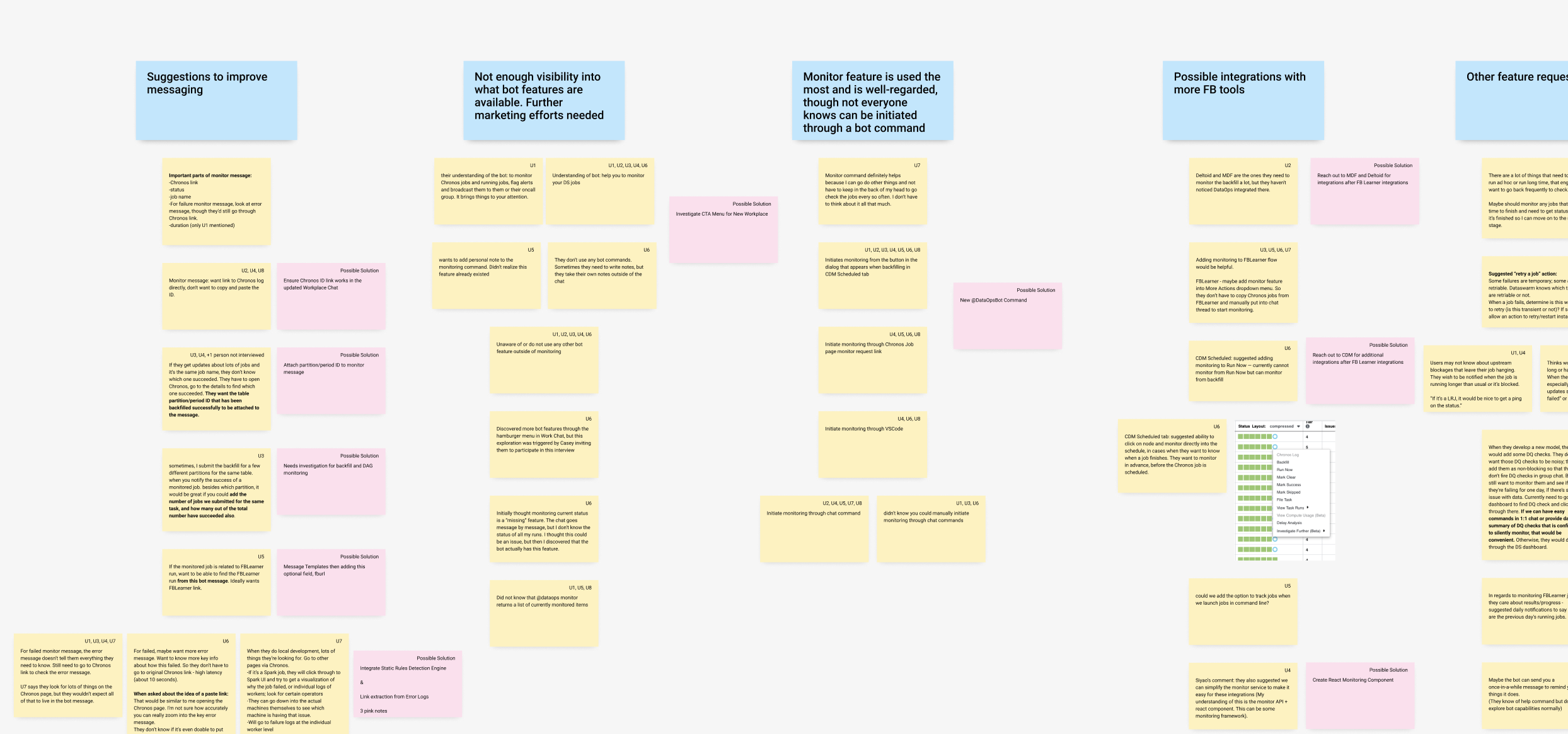
I enlisted an engineer on my team to conduct this research with me — I brought the user research expertise, and he brought the expertise to translate data engineering workflows to me.
Together, we interviewed 7 Facebook data engineers and learned about parts of data engineers’ workflows that were completely unknown to my team previously, and this relates to one of our core offerings. One key learning - every user we interviewed reported a step in their workflow where they’d have to go into another internal FB tool and extract a SQL query to investigate. After learning this, my team decided to automate the extraction of this query for customers. It was an obstacle for users that no one had ever known before.
Ultimately, learning about users’ workflows made a huge impact on not only the mobile app design but also the design of two existing related products.
This study that I initiated was the first user research study ever conducted on my team. When my team saw how impactful it was, I soon received requests from other engineering project leads to conduct 2 more studies. These 2 engineering leads became vocal research advocates.
Together, we interviewed 7 Facebook data engineers and learned about parts of data engineers’ workflows that were completely unknown to my team previously, and this relates to one of our core offerings. One key learning - every user we interviewed reported a step in their workflow where they’d have to go into another internal FB tool and extract a SQL query to investigate. After learning this, my team decided to automate the extraction of this query for customers. It was an obstacle for users that no one had ever known before.
Ultimately, learning about users’ workflows made a huge impact on not only the mobile app design but also the design of two existing related products.
This study that I initiated was the first user research study ever conducted on my team. When my team saw how impactful it was, I soon received requests from other engineering project leads to conduct 2 more studies. These 2 engineering leads became vocal research advocates.
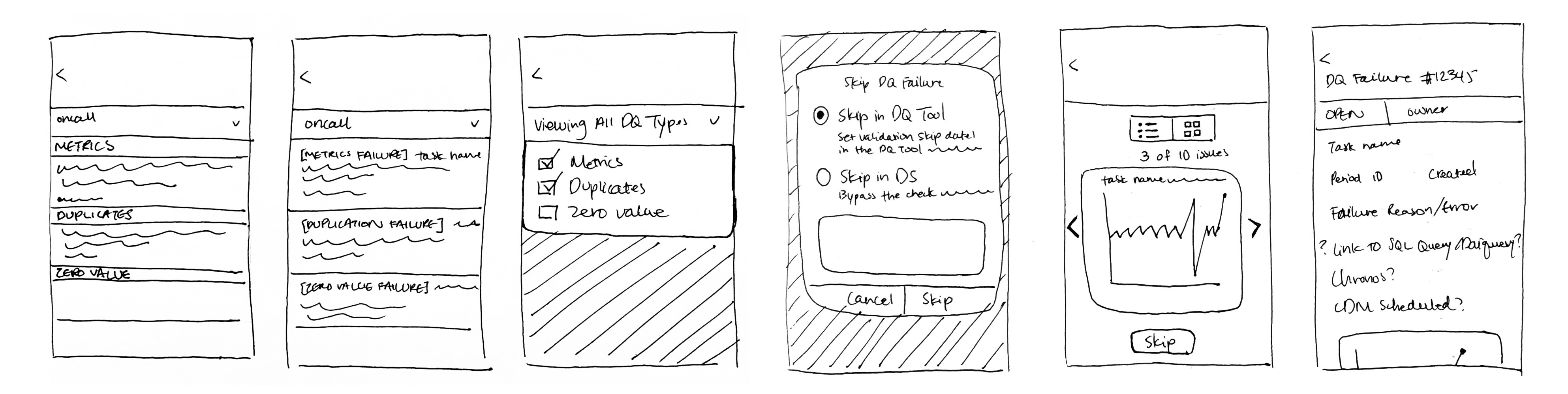
Ideation
I sketched out low-fidelity wireframes using pen & paper, with an emphasis on speed and ideas instead of visual execution.
Prototyping
Design Systems
When prototyping, I adhered to the design systems for Facebook’s internal tools.
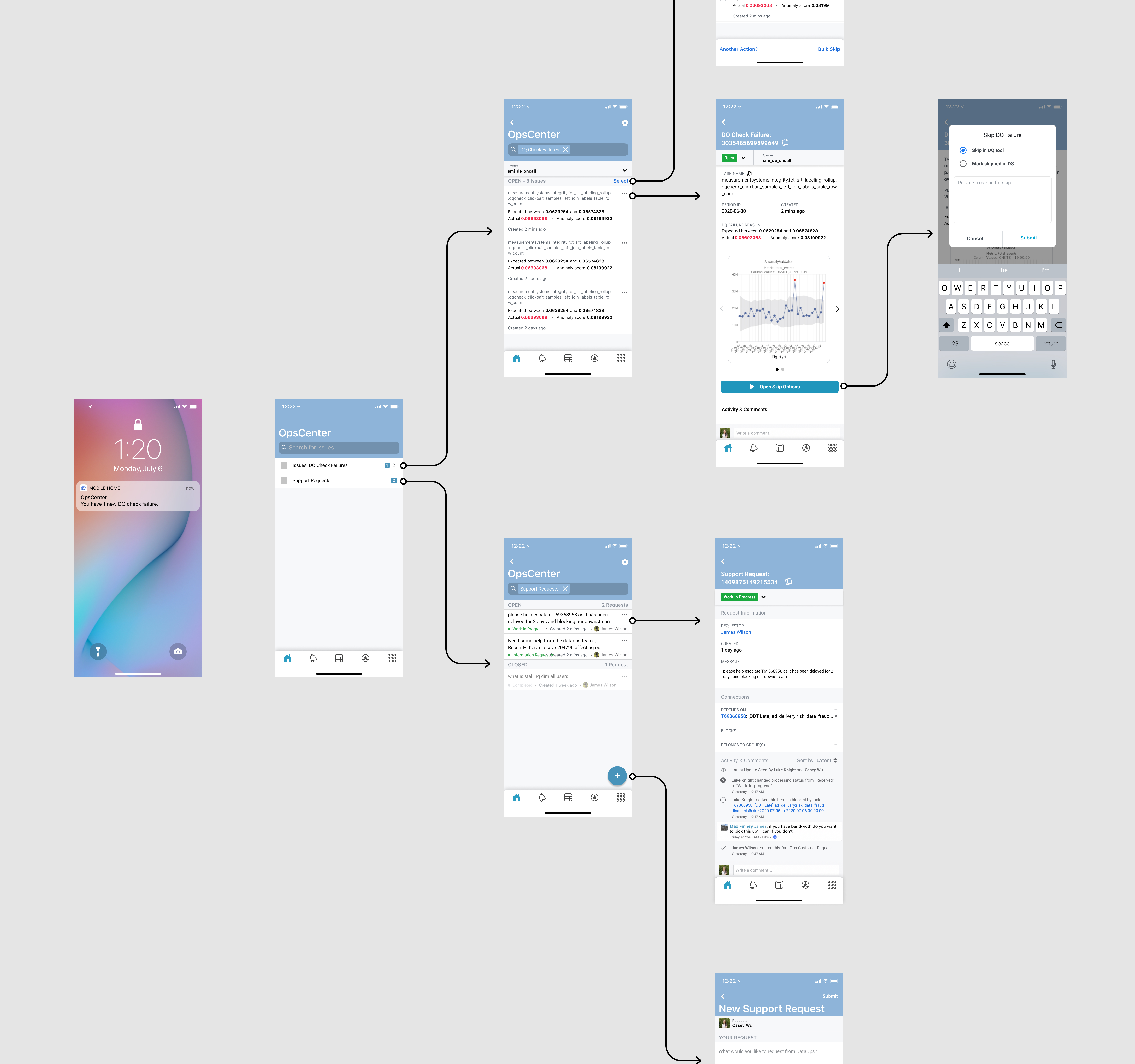
Wireflows
I created wireflows to enable stakeholder communication. These helped visualize user flows and interactions for teammates not involved in the design process.
Demo of Interaction Design
In order to enable stakeholder communication across a global team, I created the demo video below as a way to walk through the design and garner feedback.
Iteration
I went through multiple rounds of iteration involving feedback from users as well as engineers on my team.
When prototyping, I adhered to the design systems for Facebook’s internal tools.
Wireflows
I created wireflows to enable stakeholder communication. These helped visualize user flows and interactions for teammates not involved in the design process.
Demo of Interaction Design
In order to enable stakeholder communication across a global team, I created the demo video below as a way to walk through the design and garner feedback.
Iteration
I went through multiple rounds of iteration involving feedback from users as well as engineers on my team.
Usability testing
This was another step that I introduced into the product development process at DataOps. Before releasing the mobile app, I advocated for recruiting participants from our target audience and conducting usability tests.
I conducted a series of tests using a clickable mobile prototype. From this, we gained greater understanding of complex workflows, improved the copy and content hierarchy, and changed some of the actions available to users. The result was a more usable design.
I conducted a series of tests using a clickable mobile prototype. From this, we gained greater understanding of complex workflows, improved the copy and content hierarchy, and changed some of the actions available to users. The result was a more usable design.
Impact
The result was a v1 of a mobile OpsCenter that differed from the web product by:
- Focusing on only the most essential information and actions that users needed
- Offering some truly essential capabilities, such as extracting a key SQL query, that my team hadn’t even known about or built into the web product previously
Reflections
Through this project, I got to demonstrate the business value of the design process. Though it slowed the team down by a few weeks to make time for user research and designing a different experience than originally anticipated, the end product was able to better meet user needs. This means that we would save resources for users. In turn, users might use the product more or give the product a higher rating, which are essential for DataOps to continue to be a team that Facebook invests in growing.
I also just had a lot of fun on this project with knowledge-sharing with the engineers I worked with. They were open to learning about design thinking and were as delighted as I was to gain novel insights into users’ workflows. Rather than going off their assumptions and hoping that they built something useful, they were excited to learn definitively what would have a positive impact.
Meanwhile, I started off not knowing how I was possibly going to help create something useful for data engineers when I barely understood what their title meant. But I learned that I was able to contribute a lot by listening and asking questions that others may not have thought to ask because they already had so much context. Knowing so little was an asset to the team because I came to the table with no bias.
I also just had a lot of fun on this project with knowledge-sharing with the engineers I worked with. They were open to learning about design thinking and were as delighted as I was to gain novel insights into users’ workflows. Rather than going off their assumptions and hoping that they built something useful, they were excited to learn definitively what would have a positive impact.
Meanwhile, I started off not knowing how I was possibly going to help create something useful for data engineers when I barely understood what their title meant. But I learned that I was able to contribute a lot by listening and asking questions that others may not have thought to ask because they already had so much context. Knowing so little was an asset to the team because I came to the table with no bias.
© Handcrafted by Casey Wu, 2026